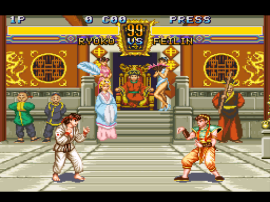
Fighter’s History (USA) (Rev A)
0 8 0
Fighter’s History (USA) (Rev A) is a classic SNES fighting game that captures the essence of arcade-style combat. As a product of the 16-bit era, it provides a straightforward yet challenging action experience that appeals to fighting game fans and retro enthusiasts alike. With its pixel art visuals and solid gameplay mechanics, it stands out as a nostalgic reminder of how fighters used to be crafted before the genre exploded in popularity.
Why Fighter’s History Is Worth Playing
This SNES classic offers a no-frills fighting experience that emphasizes timing, positioning, and strategic movement. Its visuals are typical of the era—colorful sprites and detailed backgrounds that evoke the late ’80s and early ’90s arcade scene. Despite its age, the game maintains a brisk pace, with each match feeling intense and punchy. The focus is on competitive combat rather than elaborate storylines or flashy effects, which makes it accessible for those seeking pure fighting gameplay.
What keeps players coming back is the game’s tight control scheme and its challenging difficulty curve. Fighter’s History rewards precision and patience, making victories feel satisfying. While it doesn’t have the flashy animations or character variety of later fighters, it makes up for it with a solid core that emphasizes balance and timing. If you’re interested in a fighting game that demands skill over spectacle, this title offers a rewarding experience that stands the test of time.
Tips to Get Ahead
Getting a handle on Fighter’s History requires focusing on timing and understanding your opponent’s patterns. Here are some practical tips to improve your game:
- Practice your moves in the training mode to get a feel for your character’s reach and attack speed.
- Watch your opponent’s attack patterns and look for openings to counterattack.
- Use block and dodge wisely; defensiveness can set up your own offensive opportunities.
- Mix up your attack timing to prevent your opponent from predicting your moves.
- Stay patient in close matches—rushing often leads to mistakes and unnecessary damage.
- Focus on stamina management; long exchanges can leave you vulnerable if you overcommit.
Things to Know Before You Start
Question?
Is Fighter’s History difficult for newcomers?
Answer.
It has a steep learning curve typical of early fighting games, making it more suitable for players willing to learn timing and spacing. Casual players might find it challenging at first but rewarding with practice.
Question?
How long does a typical session last?
Answer.
A single match tends to last a few minutes, but mastering the game and progressing through its challenges can take longer, especially if you want to improve your skills and unlock the full potential of each fighter.
Question?
Is Fighter’s History suitable for all ages?
Answer.
Yes, it’s a relatively straightforward fighting game with no explicit content, making it appropriate for most age groups interested in classic arcade-style gameplay.
Question?
Can I enjoy Fighter’s History casually or is it only for dedicated players?
Answer.
While the game can be played casually, its challenge level and depth tend to attract players who want to sharpen their skills and compete for high scores or victories. Focused practice can make a big difference.
Jump into Fighter’s History and see how your fighting instincts hold up. This classic offers a straightforward combat experience that keeps the spirit of old-school fighters alive—perfect for fans of the genre and newcomers alike to enjoy right in their browser.
Related games: you can also try Dragon Quest VI – Maboroshi no Daichi (Japan) [En by NoPrgress v0.90Beta2] (~Dragon Quest VI – Land of Illusion) and BS Let's Pachinko Nante Gindama 2 (Japan), or browse all other games in the SNES category.
How to Play Fighter’s History (USA) (Rev A)?
Choose your fighter, learn attack timings, and defeat your opponent through strategic moves and defense in one-on-one battles. Focus on timing, spacing, and patience to win matches.
Game Controls
Arrow keys control movement; action buttons are mapped to other keys for attacks and defenses.
Comments (0)
No comments yet. Be the first to comment!