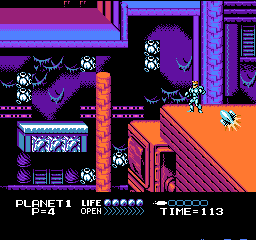
Street Fighter 2010 (Japan)
0 2 3
Street Fighter 2010 (Japan) is a rare find on the NES, combining action and adventure set in a dystopian sci-fi universe. Its pixel art and gritty vibe give a sense of futuristic combat that feels different from the brighter, martial arts-focused fighters of the time. This game takes a different route—more exploration and platforming, with an emphasis on fighting and upgrading your character as you work through various levels. It challenges players to navigate a neon-lit landscape filled with robotic enemies, hazards, and secret passages, all wrapped in pixel art that hints at its late-stage NES origins.
Step Into the World of Street Fighter 2010
The visuals lean into a cyberpunk look, with dark backgrounds highlighted by glowing neon signs and metallic foes. The sprite is blocky but expressive, and the environments evoke a dangerous, dystopian cityscape. The soundtrack features synthesized music that fits the futuristic setting, adding tension during fights and exploration. Even with its age, the game’s atmosphere stays intense, with each level throwing new challenges your way, requiring you to think and adapt. The sound design emphasizes a mechanical feel, with sharp effects for hits and explosions that reinforce the combat-focused gameplay.
How the Gameplay Hooks You
Street Fighter 2010 mixes action platforming with exploration, encouraging upgrades along the way. The pacing keeps things moving with intense combat moments and platforming segments that demand good timing. Each level introduces different enemies and obstacles, keeping the gameplay fresh. The core gameplay involves fighting robotic enemies, collecting power-ups, and exploring levels filled with hidden passages and secrets. Balancing combat, exploration, and resource use makes each part feel like a puzzle that tests your skills under pressure.
Pro Tips for Street Fighter 2010
Getting the best out of this NES game means mastering its blend of fighting and exploration. Here are some helpful pointers:
- Upgrade your abilities early by grabbing power-ups during levels; they’re key for tougher enemies.
- Pay attention to enemy patterns to anticipate attacks and save health for the hard parts.
- Explore every corner; hidden passages often hold useful items or shortcuts that save time.
- Use ranged attacks wisely to take out groups of enemies before moving in close.
- Keep moving; standing still makes you an easy target for enemies and hazards alike.
Frequently Asked Questions
Question?
Does the game have a story mode or just levels?
Street Fighter 2010 mainly consists of levels with progression through different stages rather than a traditional story mode. Its focus is on exploration and combat within each level.
Question?
Does the gameplay get repetitive or stay engaging?
While some parts are repetitive, typical of NES platformers, the variety in enemies, level design, and upgrade options help keep things interesting over time.
Question?
Can I play this game in short sessions?
Yes, each level can be finished pretty quickly, making it good for quick gaming sessions or trying to beat your best time without long commitments.
Street Fighter 2010 stands out among NES titles, offering a unique mix of action, adventure, and sci-fi exploration. Its pixelated world is a challenge worth exploring, even briefly, thanks to engaging gameplay and atmospheric design. Playing it here in your browser brings this classic straight to your screen without any fuss, giving you a taste of late-era NES gaming.
Related games: you can also try Deep Dungeon 4 – Kuro no Youjutsushi (Japan) [En by Dragoon-X v1.0] [Mapper Fix by Spinner 8] (~Deep Dungeon 4 – The Black Sorcerer) and Rampart (Japan), or browse all other games in the NES category.
How to Play Street Fighter 2010 (Japan)?
Move through levels, fight robotic enemies, collect upgrades, and explore hidden passages to progress and become stronger in a dystopian cityscape.
Game Controls
Arrow keys act as the D-pad; Enter is Start; other keys handle attack and jump actions.
You may be interested in:
-
![Zombie Hunter (Japan) [En by KingMike v1.01]](https://www.playf2p.com/wp-content/uploads/zombie-hunter-japan-en-by-kingmike-v1-01-200x120.png) NES
♥ 2
Zombie Hunter (Japan) [En by KingMike v1.01]
NES
♥ 2
Zombie Hunter (Japan) [En by KingMike v1.01] -
 NES
♥ 1
Zombie Hunter (Japan)
NES
♥ 1
Zombie Hunter (Japan) -
 NES
♥ 1
Zoids Mokushiroku (Japan)
NES
♥ 1
Zoids Mokushiroku (Japan) -
 NES
♥ 2
Zoids 2 – Zenebas no Gyakushuu (Japan)
NES
♥ 2
Zoids 2 – Zenebas no Gyakushuu (Japan) -
 NES
♥ 1
Zoids – Chuuou Tairiku no Tatakai (Japan)
NES
♥ 1
Zoids – Chuuou Tairiku no Tatakai (Japan) -
 NES
♥ 11
Zippy Race (Japan)
NES
♥ 11
Zippy Race (Japan) -
 NES
♥ 1
Zhen Ben Xi You Ji (Asia) (Unl)
NES
♥ 1
Zhen Ben Xi You Ji (Asia) (Unl) -
 NES
♥ 1
Zenbei!! Pro Basket (Japan)
NES
♥ 1
Zenbei!! Pro Basket (Japan)
Comments (0)
No comments yet. Be the first to comment!