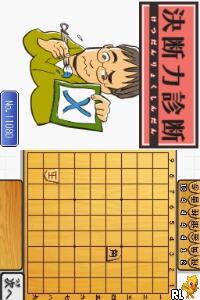
Habu Yoshiharu Shougi de Kitaeru – Ketsudanryoku DS (Japan)
0 1 0
Habu Yoshiharu Shougi de Kitaeru – Ketsudanryoku DS (Japan) is a classic Nintendo DS game that emphasizes the strategic aspects of shogi, Japan’s traditional chess-like game. Its simple interface and gradual increase in difficulty make it approachable for newcomers, without feeling overwhelming. The game provides a clear, accessible way to learn and practice shogi, whether you’re just starting out or looking to refine your skills.
What Is Habu Yoshiharu Shougi de Kitaeru – Ketsudanryoku DS?
This Nintendo DS title focuses on shogi, a game with a long history of deep strategy. It features puzzles and scenarios designed to help players improve decision-making. The core gameplay involves analyzing positions, planning moves, and anticipating your opponent’s responses, all within an instructive environment.
Habu Yoshiharu Shougi de Kitaeru – Ketsudanryoku DS offers different modes to practice various aspects of shogi. You can begin with tutorials or challenge yourself with puzzles that require thinking several moves ahead. Its straightforward rules make it easy for newcomers to pick up, while experienced players can find enough depth to keep things interesting.
What Keeps You Coming Back
The game’s puzzle approach encourages players to analyze positions and sharpen tactical skills. The variety of scenarios keeps things fresh, prompting you to develop different strategies and adapt to new situations. It’s a good way to learn the game’s nuances without the pressure of playing against an actual opponent.
Replay value comes from the structured challenges and increasing difficulty. As you advance, puzzles become more complex, demanding better foresight and planning. The game also tracks your best scores and times, giving you motivation to improve and master more advanced tactics. The simple setup combined with layered challenges makes it a useful tool for ongoing progress.
Handy Tips
If you’re starting out with Habu Yoshiharu Shougi de Kitaeru – Ketsudanryoku DS, here are some tips to help you improve more quickly:
- Get comfortable with basic shogi principles before tackling tougher puzzles. That foundation makes strategic planning easier.
- Take your time analyzing each position—rushing can cause missed opportunities.
- Watch for piece promotion chances, as they can change the course of a game.
- If you get stuck, use the hints or toggle hints on—especially early on.
- Practice often to recognize common patterns and tactical themes faster.
- Look back at your completed puzzles to see where you went wrong and learn better moves for next time.
Player FAQ
Is Habu Yoshiharu Shougi de Kitaeru – Ketsudanryoku DS suitable for beginners?
Yes, it includes beginner-friendly tutorials and puzzles that gradually introduce shogi concepts, making it accessible for new players.
Can I play this game offline, and is it good for younger players?
Since it runs directly in your browser, no internet connection is needed after loading. Its straightforward gameplay and instructional approach make it suitable for players of all ages, including children interested in strategic thinking.
Does this game require internet access or extra downloads?
No, Habu Yoshiharu Shougi de Kitaeru – Ketsudanryoku DS works natively in your browser, so you can enjoy it without any additional downloads or online requirements.
This classic from the Nintendo DS era offers a focused, puzzle-based approach to shogi that’s both educational and engaging. Playing Habu Yoshiharu Shougi de Kitaeru – Ketsudanryoku DS in your browser makes it easy to sharpen your strategic thinking anytime you want.
Related games: you can also try C.O.P. – The Recruit (USA) (En,Fr,De,Es,It) and Frogman Show D.S., The – Datte, Shouganai Janai. (Japan), or browse all other games in the Nintendo DS category.
How to Play Habu Yoshiharu Shougi de Kitaeru – Ketsudanryoku DS (Japan)?
Analyze shogi positions, plan your moves carefully, and solve puzzles to improve your strategic skills without playing against an opponent.
Game Controls
Arrow keys move the cursor; Enter confirms selections; other keys handle menu navigation and hints.
You may be interested in:
-
 Nintendo DS
♥ 1
Casper’s Scare School – Classroom Capers (USA)
Nintendo DS
♥ 1
Casper’s Scare School – Classroom Capers (USA) -
 Nintendo DS
♥ 1
Zunou Nouryoku Koujou Machine – Touch de Zunoo DS (Japan)
Nintendo DS
♥ 1
Zunou Nouryoku Koujou Machine – Touch de Zunoo DS (Japan) -
 Nintendo DS
♥ 1
Zunou ni Asekaku Game Series! Vol. 1 – Cool 104 Joker & Setline (Japan)
Nintendo DS
♥ 1
Zunou ni Asekaku Game Series! Vol. 1 – Cool 104 Joker & Setline (Japan) -
 Nintendo DS
♥ 9
Zuma’s Revenge (USA)
Nintendo DS
♥ 9
Zuma’s Revenge (USA) -
 Nintendo DS
♥ 1
Zubo (USA) (En,Fr,Es)
Nintendo DS
♥ 1
Zubo (USA) (En,Fr,Es) -
 Nintendo DS
♥ 1
Zubo (Europe) (En,Fr,De,Es,It,Nl,Sv)
Nintendo DS
♥ 1
Zubo (Europe) (En,Fr,De,Es,It,Nl,Sv) -
 Nintendo DS
♥ 1
Zorro – Quest for Justice (USA) (En,Fr,De,Es,It)
Nintendo DS
♥ 1
Zorro – Quest for Justice (USA) (En,Fr,De,Es,It) -
 Nintendo DS
♥ 1
Zorro – Quest for Justice (Europe) (En,Fr,De,Es,It)
Nintendo DS
♥ 1
Zorro – Quest for Justice (Europe) (En,Fr,De,Es,It)
Comments (0)
No comments yet. Be the first to comment!