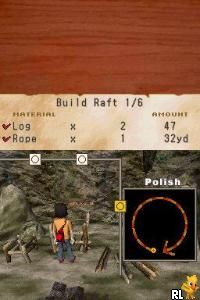
Lost in Blue (USA)
0 2 0
Lost in Blue (USA) is a classic Nintendo DS game that combines survival adventure with exploration and resource management. In this title from the Nintendo DS era, players take on the role of a castaway trying to make it on a deserted island. Its mix of storytelling, puzzle-solving, and survival mechanics creates an experience that’s both engaging and challenging, especially for those who enjoy a slower pace and strategic thinking. The simple visuals and stylus-driven controls give it a nostalgic feel, making it ideal for players seeking a relaxed but rewarding adventure that runs directly in your browser.
Why Lost in Blue Is Worth Playing
One of the most notable aspects of Lost in Blue is its atmospheric setting. The visuals, though modest, effectively convey the feeling of being stranded on an island, with lush greenery, sandy beaches, and day-night cycles that add a sense of realism. Its sound design complements the environment, immersing players in the quiet, sometimes tense moments of survival. The pacing encourages careful exploration and resource management, rewarding those who pay attention to their surroundings and plan ahead. The straightforward graphics keep the focus on puzzle-solving and decision-making rather than visual flair.
What keeps players returning to Lost in Blue is its open-ended survival mechanics and the feeling of discovery. Each session involves gathering food, crafting tools, or solving puzzles that open up new areas or resources. The atmosphere fosters a calm, reflective experience that can be surprisingly addictive. Its simple interface and controls make it accessible, even for those new to survival games, while still providing enough depth for seasoned players. Combining exploration, management, and subtle storytelling, Lost in Blue stands out as a charming, memorable game among Nintendo DS classics, now playable free in your browser.
Tips to Get Ahead
If you want to get the most out of Lost in Blue, here are some practical suggestions:
- Focus on gathering key resources early, like food and building materials, so you don’t run out later.
- Manage your inventory wisely; avoid hoarding unnecessary items, and prioritize tools that boost your survival chances.
- Observe your environment for clues about where to find hidden resources or safe spots.
- Keep an eye on your stamina and health, resting when needed to avoid setbacks during exploration.
- Try different combinations of items and tools to find new ways to progress.
- Take notes on puzzle solutions or resource locations if the game presents challenging sections, to prevent getting stuck repeatedly.
Things to Know Before You Start
Is Lost in Blue tough for casual players?
The game can be challenging, especially if you’re new to survival mechanics, but its slower pace and manageable puzzles make it accessible for most players willing to pay attention.
How long does a typical session last?
Sessions usually range from 15 to 30 minutes, depending on whether you’re exploring, solving puzzles, or managing resources. It’s good for quick breaks or longer playthroughs.
Can Lost in Blue be enjoyed by all ages?
The content is suitable for most players, but its survival themes and puzzle complexity might be better suited for those aged 10 and up. Younger players may need some help with certain mechanics.
Jump in and see how far you can go in Lost in Blue. It’s a quiet journey of survival and discovery, waiting to be explored right in your browser without any downloads or fuss. Whether you’re feeling nostalgic or new to the game, this classic offers a unique puzzle and exploration experience worth trying again or for the first time.
Related games: you can also try Harvest Moon DS – Island of Happiness (Europe) (En,Fr,De,Es,It) and Fast Food Panic (Europe) (En,Fr,De,Es,It), or browse all other games in the Nintendo DS category.
How to Play Lost in Blue (USA)?
Explore the island, gather resources, craft tools, and solve puzzles to survive and uncover new areas. Manage your inventory, health, and stamina while making strategic decisions to progress.
Game Controls
Arrow keys move; space or enter interacts; other keys perform actions as mapped.
You may be interested in:
-
 Nintendo DS
♥ 1
Casper’s Scare School – Classroom Capers (USA)
Nintendo DS
♥ 1
Casper’s Scare School – Classroom Capers (USA) -
 Nintendo DS
♥ 1
Zunou Nouryoku Koujou Machine – Touch de Zunoo DS (Japan)
Nintendo DS
♥ 1
Zunou Nouryoku Koujou Machine – Touch de Zunoo DS (Japan) -
 Nintendo DS
♥ 1
Zunou ni Asekaku Game Series! Vol. 1 – Cool 104 Joker & Setline (Japan)
Nintendo DS
♥ 1
Zunou ni Asekaku Game Series! Vol. 1 – Cool 104 Joker & Setline (Japan) -
 Nintendo DS
♥ 9
Zuma’s Revenge (USA)
Nintendo DS
♥ 9
Zuma’s Revenge (USA) -
 Nintendo DS
♥ 1
Zubo (USA) (En,Fr,Es)
Nintendo DS
♥ 1
Zubo (USA) (En,Fr,Es) -
 Nintendo DS
♥ 1
Zubo (Europe) (En,Fr,De,Es,It,Nl,Sv)
Nintendo DS
♥ 1
Zubo (Europe) (En,Fr,De,Es,It,Nl,Sv) -
 Nintendo DS
♥ 1
Zorro – Quest for Justice (USA) (En,Fr,De,Es,It)
Nintendo DS
♥ 1
Zorro – Quest for Justice (USA) (En,Fr,De,Es,It) -
 Nintendo DS
♥ 1
Zorro – Quest for Justice (Europe) (En,Fr,De,Es,It)
Nintendo DS
♥ 1
Zorro – Quest for Justice (Europe) (En,Fr,De,Es,It)
Comments (0)
No comments yet. Be the first to comment!