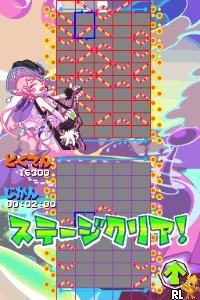
Oto o Tsunagou! Gunpey-Rebirth (Japan)
0 1 0
Oto o Tsunagou! Gunpey-Rebirth (Japan) is a puzzle game for the Nintendo DS that combines rhythm-based mechanics with strategic tile linking. The game harks back to the handheld console era, known for its touch controls and portable design. It stands out with its mix of music and puzzle solving, inviting players to connect musical notes in a flowing, rhythmic pattern. This creates an engaging challenge that appeals to puzzle fans and music lovers alike.
Oto o Tsunagou! Gunpey-Rebirth: Gameplay Overview
The main idea involves drawing lines to connect musical notes across a grid, forming harmonious sequences. Using the Nintendo DS touchscreen, players slide their finger to link notes of the same color, aiming to create continuous paths without crossing existing lines. Timing and spatial awareness are key, as players need to identify the right connections quickly to keep the rhythm going and avoid dead ends or running out of time.
As levels progress, patterns become more complex, requiring careful planning and quick reactions. The touch controls feel natural—players just slide their finger across the screen to draw connections, making the game accessible. Success depends on keeping a steady rhythm, as musical cues often influence the pace of the puzzle, blending sound and visuals into a cohesive challenge.
Modes, Levels and Progression
The game offers several difficulty levels, each with more intricate patterns and faster sequences. New mechanics, like additional note types or obstacles, are introduced gradually to keep things fresh and test your growing skills. Its design encourages learning earlier puzzles well before moving on to tougher ones.
While there isn’t a traditional story, the game guides you through stages that encourage replaying to improve scores and unlock harder levels. The variety of puzzles keeps things interesting, so you’re likely to revisit the game multiple times. The design suits quick sessions, perfect for portable play yet with enough depth to require some practice.
Winning Strategies
Start with easier puzzles to get a feel for the rhythm and controls before tackling tougher layouts. Pay attention to musical cues—they help time your connections. Think ahead to avoid crossing lines or creating dead ends, especially in later levels. Use the edges of the grid wisely to extend your paths and prevent blocking yourself. Maintaining a steady rhythm is crucial, so practice keeping a consistent pace. Focus on clearing levels efficiently, but don’t rush—accuracy matters most.
Common Questions About Oto o Tsunagou! Gunpey-Rebirth
How does the difficulty change as I go along?
Levels introduce more complex patterns and faster rhythms, demanding quicker reactions and better planning. Early puzzles are simple enough to learn the basics, while later ones require more strategic thinking and precise timing.
Are there different modes or difficulty settings?
The game features multiple difficulty levels that unlock as you finish puzzles, but it doesn’t have separate modes. The increasing complexity provides a natural challenge that keeps the game engaging.
How long can I expect to play in one sitting?
Sessions can last from a few minutes for quick puzzles to longer if you aim to complete multiple levels or improve your scores. The game encourages repeated attempts and offers plenty of replay value for players who want to master the rhythm mechanics.
Playing Oto o Tsunagou! Gunpey-Rebirth here means instant access to a polished puzzle experience rooted in Nintendo DS classics. Its combo of rhythm and logic makes it a memorable addition to any puzzle collection, with enough depth to keep players coming back for more.
Related games: you can also try New International Track & Field (Korea) and Layton Kyouju to Fushigi na Machi (Japan) (Rev 2), or browse all other games in the Nintendo DS category.
How to Play Oto o Tsunagou! Gunpey-Rebirth (Japan)?
Connect matching musical notes on the grid by sliding to create continuous, rhythmic paths without crossing lines. Complete levels by forming harmonious sequences quickly and accurately to progress through increasing difficulty.
Game Controls
Arrow keys or WASD move; space or Enter confirms; mouse or touch input for drawing lines.
You may be interested in:
-
 Nintendo DS
♥ 1
Casper’s Scare School – Classroom Capers (USA)
Nintendo DS
♥ 1
Casper’s Scare School – Classroom Capers (USA) -
 Nintendo DS
♥ 1
Zunou Nouryoku Koujou Machine – Touch de Zunoo DS (Japan)
Nintendo DS
♥ 1
Zunou Nouryoku Koujou Machine – Touch de Zunoo DS (Japan) -
 Nintendo DS
♥ 1
Zunou ni Asekaku Game Series! Vol. 1 – Cool 104 Joker & Setline (Japan)
Nintendo DS
♥ 1
Zunou ni Asekaku Game Series! Vol. 1 – Cool 104 Joker & Setline (Japan) -
 Nintendo DS
♥ 9
Zuma’s Revenge (USA)
Nintendo DS
♥ 9
Zuma’s Revenge (USA) -
 Nintendo DS
♥ 1
Zubo (USA) (En,Fr,Es)
Nintendo DS
♥ 1
Zubo (USA) (En,Fr,Es) -
 Nintendo DS
♥ 1
Zubo (Europe) (En,Fr,De,Es,It,Nl,Sv)
Nintendo DS
♥ 1
Zubo (Europe) (En,Fr,De,Es,It,Nl,Sv) -
 Nintendo DS
♥ 1
Zorro – Quest for Justice (USA) (En,Fr,De,Es,It)
Nintendo DS
♥ 1
Zorro – Quest for Justice (USA) (En,Fr,De,Es,It) -
 Nintendo DS
♥ 1
Zorro – Quest for Justice (Europe) (En,Fr,De,Es,It)
Nintendo DS
♥ 1
Zorro – Quest for Justice (Europe) (En,Fr,De,Es,It)
Comments (0)
No comments yet. Be the first to comment!