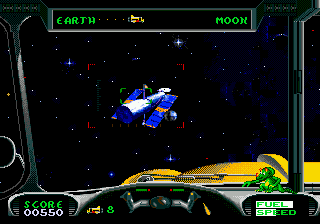
Magic School Bus, The (USA)
0 1 1
Magic School Bus, The (USA) is a classic Genesis game that captures the spirit of the popular children’s series. It’s designed to teach players about science and the natural world through interactive activities that keep learning fun for younger audiences. As a product of its time, this Genesis title offers a simple experience centered around exploration and discovery.
Magic School Bus, The: Gameplay Overview
The game involves guiding the Magic School Bus through different environments to explore scientific ideas. Players often travel through places like the human body, outer space, or underwater worlds. The main goal is to complete tasks or solve puzzles related to biology, physics, or environmental science. These activities might ask players to identify objects, answer questions, or perform basic interactions to move forward.
The gameplay is accessible and educational, encouraging observation and curiosity. The game features a series of stages, each focusing on a new scientific theme with its own challenges. Players can experiment with the environment, gather information, and use what they learn to solve problems. The emphasis is on understanding and discovery rather than quick reflexes, making it suitable for a wide age range.
Modes, Levels and Progression
As a single-player game, it offers several levels, each centered on a different scientific topic. Each stage has clear goals and is set in a specific environment. Moving through the game involves completing these levels one after another, with tasks gradually becoming more detailed and complex. The content introduces basic scientific concepts in a straightforward way.
While there aren’t multiple modes or branching paths, the variety of settings and themes helps keep the game interesting. Levels tend to be short, fitting the educational focus and design style of the time. Replay value mainly comes from revisiting levels to better understand concepts or try different approaches to puzzles, rather than unlocking new content or storylines.
Winning Strategies
To do well, players should pay attention to clues in the environment and use what they’ve learned. Here are some tips:
- Notice hints in the surroundings that suggest the right actions or answers.
- Read instructions and questions carefully before responding.
- Explore every part of each level to find hidden hints or useful items.
- Remember the scientific facts introduced in the game to solve puzzles more easily.
- Think logically and take your time rather than rushing through tasks.
- If you’re stuck, review previous interactions or hints within the game environment.
Common Questions About Magic School Bus, The
How does the difficulty change across levels?
The game starts with simple identification and basic facts, then gradually introduces more challenging puzzles and ideas. The difficulty matches what a young player can handle and doesn’t become overwhelming.
Are there different modes or levels of play?
The game has a series of levels based on various scientific themes, but it doesn’t include multiple game modes. Progression is linear, with each environment adding new content and challenges.
How much replay value does the game have?
You can revisit levels to better understand concepts or complete tasks more efficiently. Since there are no unlockables or multiple endings, the main reason to replay is for reinforcement and curiosity.
The classic Genesis experience of Magic School Bus, The offers a straightforward way to explore science, making it both a useful educational tool and a nostalgic favorite. Its focus on discovery and learning means players can enjoy an engaging and instructive gaming experience.
Related games: you can also try F-22 Interceptor (USA, Europe) (June 1992) and Ashura in Sonic 1, or browse all other games in the Genesis category.
How to Play Magic School Bus, The (USA)?
Guide the Magic School Bus through different environments, complete tasks, answer questions, and solve puzzles to learn about science and the natural world.
Game Controls
Arrow keys control movement; other keys handle actions and interactions.
You may be interested in:
-
 Genesis
♥ 2
Master of Weapon (Japan)
Genesis
♥ 2
Master of Weapon (Japan) -
 Genesis
♥ 15
Master of Monsters (USA)
Genesis
♥ 15
Master of Monsters (USA) -
 Genesis
♥ 1
Master of Monsters (Japan)
Genesis
♥ 1
Master of Monsters (Japan) -
 Genesis
♥ 4
Marvel Land (USA)
Genesis
♥ 4
Marvel Land (USA) -
 Genesis
♥ 2
Marvel Land (Japan)
Genesis
♥ 2
Marvel Land (Japan) -
 Genesis
♥ 20
Marsupilami (USA) (En,Fr,De,Es,It)
Genesis
♥ 20
Marsupilami (USA) (En,Fr,De,Es,It) -
 Genesis
♥ 2
Marsupilami (Europe) (En,Fr,De,Es,It)
Genesis
♥ 2
Marsupilami (Europe) (En,Fr,De,Es,It) -
 Genesis
♥ 12
Marko’s Magic Football (USA)
Genesis
♥ 12
Marko’s Magic Football (USA)
Comments (0)
No comments yet. Be the first to comment!