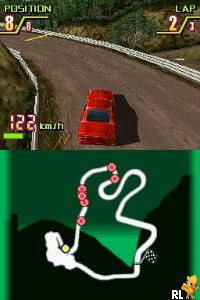
Bae Yong-Joon to Manabu Kankokugo DS (Japan)
0 1 0
Bae Yong-Joon to Manabu Kankokugo DS (Japan) is a Nintendo DS title that combines language learning with engaging gameplay. Its goal is to help players improve their Korean and Japanese skills in a way that feels accessible and enjoyable. Taking advantage of the DS’s dual screens and stylus input, it offers an interactive experience that stands out among similar games from its time. Originally aimed at Japanese audiences, it provides a straightforward approach to studying Korean and Japanese, making it useful for learners at different levels who want a portable, game-like way to pick up new languages.
Bae Yong-Joon to Manabu Kankokugo DS: Gameplay Overview
The main gameplay involves exercises in recognizing vocabulary and common phrases. Words or sentences appear on the top screen, and players select or write the correct translation or response with the stylus. The game is made up of various mini-games and quizzes that adapt to how well you’re doing, giving immediate feedback to reinforce what you learn. This setup breaks down complex language concepts into smaller, manageable tasks, which can make learning less daunting for beginners, while still offering enough challenge for those with more experience.
It emphasizes repetition and context, with activities like matching words to images, filling in blanks, and practicing pronunciation. The dual screens are used well—questions show on the top, while hints, options, or extra info appear on the bottom. This encourages active participation, as players often need to select answers with the stylus or type characters, creating a tactile way to practice that makes good use of the DS hardware.
Modes, Levels and Progression
The game has a clear progression system. Players start with basic vocabulary and gradually unlock more complex phrases and grammar points. Different difficulty levels let you adjust the challenge based on your familiarity with the language. As you advance, the quizzes become tougher, testing your ability to recall and apply what you’ve learned in various situations. The content is organized into sections focused on topics like greetings, shopping, or travel—helpful for real-world language use.
There are also review sections and mini-games designed to reinforce learning through repetition. This variety helps keep things interesting across multiple play sessions, and the progression system lets you see how much you’ve improved as you learn new words and sentence structures. You can revisit lessons or challenge yourself with higher difficulty levels, making the game suitable for casual players and more dedicated learners alike.
Winning Strategies
Practice regularly to keep your skills sharp and build speed.
- Use hints sparingly to challenge yourself and get the most out of each session.
- Repeat lessons or quizzes where you’re less confident to strengthen weaker areas.
- Pay attention to pronunciation prompts to improve listening and speaking abilities.
- Revisit previous lessons through review sections to help with retention.
- Try to finish lessons within the recommended time to build fluency and confidence.
Common Questions About Bae Yong-Joon to Manabu Kankokugo DS
Does the game stay interesting over time?
Yes, with multiple mini-games and themed lessons that you can revisit, it supports ongoing practice.
How does the difficulty change as I go?
The game slowly ramps up in complexity, introducing new vocabulary, longer sentences, and more challenging exercises as your skills improve.
Can I learn practical language skills outside of the game?
While it mainly focuses on vocabulary and phrase recognition, the lessons and pronunciation practice can help with basic conversational abilities in Korean and Japanese, especially for beginners or travelers.
Bae Yong-Joon to Manabu Kankokugo DS offers a straightforward way for language learners to practice Japanese and Korean. Its variety of activities and gradual difficulty make it a practical choice for those who want a portable, game-based learning experience on the Nintendo DS. The design keeps things simple, allowing players to progress steadily while building useful language skills, all playable directly in your browser.
Related games: you can also try Anna & die Liebe (Germany) and Arthur and the Invisibles – The Game (USA) (En,Fr,Es), or browse all other games in the Nintendo DS category.
How to Play Bae Yong-Joon to Manabu Kankokugo DS (Japan)?
Select or write translations for words and phrases shown on the top screen using the stylus, completing mini-games and quizzes that adapt to your skill level to improve Korean and Japanese. Progress through levels by mastering vocabulary and grammar.
Game Controls
Arrow keys move the cursor or selection; Enter confirms choices or inputs; mouse or stylus used for interaction.
You may be interested in:
-
 Nintendo DS
♥ 1
Casper’s Scare School – Classroom Capers (USA)
Nintendo DS
♥ 1
Casper’s Scare School – Classroom Capers (USA) -
 Nintendo DS
♥ 1
Zunou Nouryoku Koujou Machine – Touch de Zunoo DS (Japan)
Nintendo DS
♥ 1
Zunou Nouryoku Koujou Machine – Touch de Zunoo DS (Japan) -
 Nintendo DS
♥ 1
Zunou ni Asekaku Game Series! Vol. 1 – Cool 104 Joker & Setline (Japan)
Nintendo DS
♥ 1
Zunou ni Asekaku Game Series! Vol. 1 – Cool 104 Joker & Setline (Japan) -
 Nintendo DS
♥ 9
Zuma’s Revenge (USA)
Nintendo DS
♥ 9
Zuma’s Revenge (USA) -
 Nintendo DS
♥ 1
Zubo (USA) (En,Fr,Es)
Nintendo DS
♥ 1
Zubo (USA) (En,Fr,Es) -
 Nintendo DS
♥ 1
Zubo (Europe) (En,Fr,De,Es,It,Nl,Sv)
Nintendo DS
♥ 1
Zubo (Europe) (En,Fr,De,Es,It,Nl,Sv) -
 Nintendo DS
♥ 1
Zorro – Quest for Justice (USA) (En,Fr,De,Es,It)
Nintendo DS
♥ 1
Zorro – Quest for Justice (USA) (En,Fr,De,Es,It) -
 Nintendo DS
♥ 1
Zorro – Quest for Justice (Europe) (En,Fr,De,Es,It)
Nintendo DS
♥ 1
Zorro – Quest for Justice (Europe) (En,Fr,De,Es,It)
Comments (0)
No comments yet. Be the first to comment!