Bakumatsu Renka Shinsengumi DS (Japan)
0 1 0
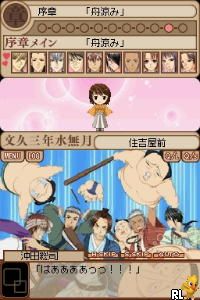
Bakumatsu Renka Shinsengumi DS (Japan) is a Nintendo DS game that takes players back to the final years of the Edo period, a time marked by political turmoil and samurai bravery. Its Japanese setting and focus on history help bring to life an era where loyalty and honor influenced every choice. The game offers a nostalgic look at the handheld’s heyday, blending visual storytelling with dialogue that captures the spirit of the shinsengumi and the chaos of the bakumatsu.
Step Into the World of Bakumatsu Renka Shinsengumi DS
Visually, Bakumatsu Renka Shinsengumi DS shows detailed 2D character sprites and backgrounds that remind you of late 2000s Japanese visual novels. Its art style highlights traditional costumes and historical scenes, placing players in Edo-period streets and Kyoto interiors. The soundtrack features subtle, traditional Japanese melodies that add a sense of urgency and nostalgia, making each scene feel more emotionally charged.
The interface is simple, with lots of dialogue and static scenes focused on storytelling rather than action. As a Nintendo DS classic, it feels intimate, with players guiding the story through choices that shape interactions and outcomes. The Japanese language might be a hurdle for some, but visual cues and contextual hints help follow the story, making it accessible even if your Japanese isn’t perfect.
How the Gameplay Hooks You
The game uses a visual novel approach, where you spend most of your time reading dialogue and choosing responses at key moments. This pacing allows you to get into the minds of historical figures and experience the tense political atmosphere. The branching storylines mean different choices lead to different endings, encouraging replay without complicated mechanics or combat.
Progression comes from advancing conversations, unlocking new scenes, and exploring different options. Though it’s mainly a story-focused game, the decision points keep things engaging by affecting relationships and how the story unfolds. Play sessions are usually short, so you can enjoy meaningful moments without committing long blocks of time.
Pro Tips for Bakumatsu Renka Shinsengumi DS
Knowing which characters or storylines interest you can help you choose responses. Pay attention to dialogue hints, as they often point to good responses for specific endings.
- Read each dialogue carefully; rushing might cause you to miss clues for future choices.
- If you’re aiming for a particular ending, try replaying scenes with different responses to see how the story changes.
- Use the in-game save feature to test different options without losing progress.
- Getting familiar with the history behind the bakumatsu era can deepen your understanding and emotional connection.
- Since the game is in Japanese, visual cues and context can guide your decisions if you’re not fluent.
Frequently Asked Questions
Does Bakumatsu Renka Shinsengumi DS work well in short play sessions?
Absolutely. Its story-driven format makes it easy to pause after key scenes, perfect for quick, focused play sessions.
Is the game repetitive if I replay it multiple times?
Not really. Different choices lead to different endings, keeping each playthrough fresh and interesting.
Can I enjoy this game if I don’t understand Japanese?
The visual cues and static scenes help follow the story, but understanding some Japanese makes the experience richer.
This classic Nintendo DS title offers a story rooted in Japanese history. Bakumatsu Renka Shinsengumi DS invites you to step into the shoes of its characters and explore the moral dilemmas of a key era—all available to enjoy directly in your browser.
Related games: you can also try Ant Nation (Europe) (En,Fr,De,Es,It) and ASH – Archaic Sealed Heat (Japan), or browse all other games in the Nintendo DS category.
How to Play Bakumatsu Renka Shinsengumi DS (Japan)?
Read dialogue, choose responses at key moments to influence the story and reach different endings. Progress by exploring options and unlocking scenes through decision-making.
Game Controls
Arrow keys for navigation; Enter to select responses; other keys for menu actions.
You may be interested in:
-
 Nintendo DS
♥ 1
Casper’s Scare School – Classroom Capers (USA)
Nintendo DS
♥ 1
Casper’s Scare School – Classroom Capers (USA) -
 Nintendo DS
♥ 1
Zunou Nouryoku Koujou Machine – Touch de Zunoo DS (Japan)
Nintendo DS
♥ 1
Zunou Nouryoku Koujou Machine – Touch de Zunoo DS (Japan) -
 Nintendo DS
♥ 1
Zunou ni Asekaku Game Series! Vol. 1 – Cool 104 Joker & Setline (Japan)
Nintendo DS
♥ 1
Zunou ni Asekaku Game Series! Vol. 1 – Cool 104 Joker & Setline (Japan) -
 Nintendo DS
♥ 9
Zuma’s Revenge (USA)
Nintendo DS
♥ 9
Zuma’s Revenge (USA) -
 Nintendo DS
♥ 1
Zubo (USA) (En,Fr,Es)
Nintendo DS
♥ 1
Zubo (USA) (En,Fr,Es) -
 Nintendo DS
♥ 1
Zubo (Europe) (En,Fr,De,Es,It,Nl,Sv)
Nintendo DS
♥ 1
Zubo (Europe) (En,Fr,De,Es,It,Nl,Sv) -
 Nintendo DS
♥ 1
Zorro – Quest for Justice (USA) (En,Fr,De,Es,It)
Nintendo DS
♥ 1
Zorro – Quest for Justice (USA) (En,Fr,De,Es,It) -
 Nintendo DS
♥ 1
Zorro – Quest for Justice (Europe) (En,Fr,De,Es,It)
Nintendo DS
♥ 1
Zorro – Quest for Justice (Europe) (En,Fr,De,Es,It)
Comments (0)
No comments yet. Be the first to comment!