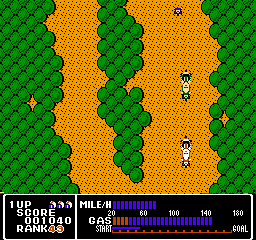
Dash Yarou (Japan)
0 2 2
Dash Yarou (Japan) is a simple NES game that takes players into a pixelated world full of action. It captures the feel of those classic arcade challenges, with fast, easy-to-pick-up gameplay. Its visuals are basic but charming, and the chiptune music adds a nostalgic touch that reminds players of early console days. Playing it in your browser makes it easy to enjoy this piece of NES history on modern devices, especially if you’re after a quick retro fix.
Step Into the World of Dash Yarou
Dash Yarou puts players into a straightforward pixel environment, typical of early NES titles. The visuals are clear and bright, standing out against dark backgrounds and giving off a retro vibe. The sound design is simple, with chiptune melodies and basic effects that support the gameplay without distracting. The pace relies on quick reflexes and timing, so staying alert is key as you move through its simple but challenging setting.
The overall feeling leans toward an arcade vibe — fast action with immediate feedback. Even with its minimal look, Dash Yarou’s visuals and sounds bring back memories for those familiar with NES classics. The environment stays consistent, focusing on clarity and challenge rather than complex stories or elaborate scenery. It’s a good choice for short gaming sessions that prioritize pure gameplay over story or graphics.
How the Gameplay Hooks You
The game is based on quick, repetitive action that tests your reflexes and pattern recognition. The goal is to get through levels by dodging obstacles and enemies, all while staying in motion. It’s tough, with a steep difficulty curve and tight timing that demands precision. As you go further, the difficulty ramps up with new obstacle patterns, encouraging you to beat your high scores or improve your times.
The pace is fast, with respawns happening instantly and mechanics that let you try again right away. This setup helps you sharpen your skills quickly, making even short gaming sessions satisfying. Success comes fast, and failures are just opportunities to try again. The game’s straightforward design makes Dash Yarou perfect for quick bursts of play with enough challenge to keep you coming back.
Pro Tips for Dash Yarou
Getting started with a few simple strategies can make your gameplay more enjoyable. Focus on timing your moves carefully to dodge obstacles instead of rushing through levels.
- Pay attention to enemy patterns so you can predict their movements and plan better routes.
- Practice small, controlled movements to improve your reaction speed.
- Be patient; rushing can lead to mistakes and setbacks.
- If possible, pause briefly to assess situations, helping you make smarter choices.
- Prioritize surviving over scoring early on; mastering movement builds a solid foundation for higher scores later.
Frequently Asked Questions
Question?
Can I play Dash Yarou during short gaming sessions?
Definitely. Its quick respawns and simple gameplay make it ideal for quick plays, letting you jump in and out easily.
Question?
Does the game get repetitive after a while?
While it’s mostly straightforward, the difficulty increases and scoring adds some variety, so it stays engaging even after multiple runs.
Question?
Is Dash Yarou available in languages other than Japanese?
This version is in Japanese, so some text may be in that language, which might be a bit confusing if you don’t understand it.
Playing Dash Yarou offers a simple, nostalgic NES experience focused on quick reflexes and pattern recognition. It’s a compact piece of retro gaming that stays fun through its straightforward approach, making it perfect for a quick challenge of old-school style.
Related games: you can also try Cabal (USA) and Adventures of Lolo 2 (USA), or browse all other games in the NES category.
How to Play Dash Yarou (Japan)?
Run through levels by dodging obstacles and enemies, using quick reflexes and timing to survive longer and beat your high score.
Game Controls
Arrow keys control movement; other keys handle actions, similar to a classic NES controller.
You may be interested in:
-
![Zombie Hunter (Japan) [En by KingMike v1.01]](https://www.playf2p.com/wp-content/uploads/zombie-hunter-japan-en-by-kingmike-v1-01-200x120.png) NES
♥ 2
Zombie Hunter (Japan) [En by KingMike v1.01]
NES
♥ 2
Zombie Hunter (Japan) [En by KingMike v1.01] -
 NES
♥ 1
Zombie Hunter (Japan)
NES
♥ 1
Zombie Hunter (Japan) -
 NES
♥ 1
Zoids Mokushiroku (Japan)
NES
♥ 1
Zoids Mokushiroku (Japan) -
 NES
♥ 2
Zoids 2 – Zenebas no Gyakushuu (Japan)
NES
♥ 2
Zoids 2 – Zenebas no Gyakushuu (Japan) -
 NES
♥ 1
Zoids – Chuuou Tairiku no Tatakai (Japan)
NES
♥ 1
Zoids – Chuuou Tairiku no Tatakai (Japan) -
 NES
♥ 11
Zippy Race (Japan)
NES
♥ 11
Zippy Race (Japan) -
 NES
♥ 1
Zhen Ben Xi You Ji (Asia) (Unl)
NES
♥ 1
Zhen Ben Xi You Ji (Asia) (Unl) -
 NES
♥ 1
Zenbei!! Pro Basket (Japan)
NES
♥ 1
Zenbei!! Pro Basket (Japan)
Comments (0)
No comments yet. Be the first to comment!