Lux-Pain (Japan)
0 1 0
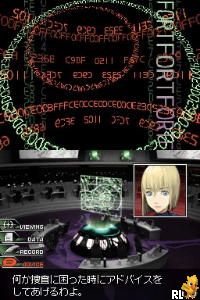
Lux-Pain (Japan) is a standout from the Nintendo DS era, mixing dark, suspenseful tones with a storytelling approach that feels both intimate and unsettling. Its visuals are simple but effective, with sharp character portraits and plain backgrounds that highlight mood and character interactions. The art style is clean, focusing on expressive designs and darker colors to reinforce its atmosphere. Ambient music and subtle sounds add tension during key moments, building a sense of unease that lingers throughout the game. The experience centers on dialogue, with voice acting kept minimal but complemented by atmospheric sound design.
Step Into the World of Lux-Pain
The setting feels tight but intense, often revolving around a mystery uncovered through conversations and investigation. The game’s tone hints at supernatural themes and psychological elements, pulling players into a story about uncovering secrets and confronting inner fears. Its Japanese origins might mean some language barriers if played in the original language, but visual cues and context help keep the story clear.
How the Gameplay Hooks You
Playing Lux-Pain involves reading dialogue, making choices, and solving puzzles that push the story forward. The pacing is steady, encouraging careful attention to details in conversations and clues, which adds a tense, reflective vibe. You investigate incidents, chat with characters, and piece together the mystery, with suspense building through narrative reveals. Understanding subtle story nuances makes each decision meaningful and deepens the intrigue.
The game is designed for short, focused sessions, with each part offering a chunk of story or investigation. It doesn’t rely heavily on quick action or frantic gameplay, but the tension and twists keep you interested from start to finish. Its slower, thoughtful rhythm appeals to those who prefer storytelling and atmosphere over rapid play, making each discovery feel earned and significant.
Pro Tips for Lux-Pain
Maximize your experience by paying close attention to dialogue and visual cues.
- Note recurring themes or details in conversations—these often point to important plot elements.
- Explore all dialogue options, as different choices can reveal new clues or story paths.
- Watch for background details; subtle visual hints may carry important information.
- If you get stuck, revisit previous conversations to find missed clues or alternative responses.
- Maintain a steady pace—rushing can cause you to overlook subtle story elements or clues.
- Focus on the overall mood and tone; understanding the emotional context can clarify ambiguous dialogue or events.
Frequently Asked Questions
Can Lux-Pain be played in short sessions?
Absolutely. Its story-driven style makes it easy to pause and pick up later, ideal for brief playthroughs focused on narrative rather than quick action.
Is it difficult to progress?
The difficulty is moderate; solving puzzles and understanding the story are key, but it doesn’t depend on reflexes or timed mechanics. Some language barriers might be a challenge if you’re playing in Japanese.
Can I enjoy Lux-Pain without knowing Japanese?
While the game was originally in Japanese, many aspects are understandable through visuals, expressions, and context. Still, some details might be missed without a translation.
Playing Lux-Pain here lets you experience a compelling narrative adventure directly in your browser. Its atmospheric storytelling and measured pace offer a distinct experience that rewards patience and careful attention. This classic remains an interesting example of storytelling on the Nintendo DS, now available for free in your browser.
Related games: you can also try Bratz Kidz – Party (Europe) (En,Fr,De,Es,It,Sv,No,Da) and DS Kageyama Method Dennou Hanpuku – Tadashii Kanji Kakitori-kun – Kondo wa Kanken Taisaku Da yo! (Japan), or browse all other games in the Nintendo DS category.
How to Play Lux-Pain (Japan)?
Read dialogue carefully, choose responses, and investigate clues to uncover the story and solve mysteries. Pay attention to visual hints and conversation details to progress through the game.
Game Controls
Arrow keys move cursor; Enter selects options; other keys handle actions and navigation.
You may be interested in:
-
 Nintendo DS
♥ 1
Casper’s Scare School – Classroom Capers (USA)
Nintendo DS
♥ 1
Casper’s Scare School – Classroom Capers (USA) -
 Nintendo DS
♥ 1
Zunou Nouryoku Koujou Machine – Touch de Zunoo DS (Japan)
Nintendo DS
♥ 1
Zunou Nouryoku Koujou Machine – Touch de Zunoo DS (Japan) -
 Nintendo DS
♥ 1
Zunou ni Asekaku Game Series! Vol. 1 – Cool 104 Joker & Setline (Japan)
Nintendo DS
♥ 1
Zunou ni Asekaku Game Series! Vol. 1 – Cool 104 Joker & Setline (Japan) -
 Nintendo DS
♥ 9
Zuma’s Revenge (USA)
Nintendo DS
♥ 9
Zuma’s Revenge (USA) -
 Nintendo DS
♥ 1
Zubo (USA) (En,Fr,Es)
Nintendo DS
♥ 1
Zubo (USA) (En,Fr,Es) -
 Nintendo DS
♥ 1
Zubo (Europe) (En,Fr,De,Es,It,Nl,Sv)
Nintendo DS
♥ 1
Zubo (Europe) (En,Fr,De,Es,It,Nl,Sv) -
 Nintendo DS
♥ 1
Zorro – Quest for Justice (USA) (En,Fr,De,Es,It)
Nintendo DS
♥ 1
Zorro – Quest for Justice (USA) (En,Fr,De,Es,It) -
 Nintendo DS
♥ 1
Zorro – Quest for Justice (Europe) (En,Fr,De,Es,It)
Nintendo DS
♥ 1
Zorro – Quest for Justice (Europe) (En,Fr,De,Es,It)
Comments (0)
No comments yet. Be the first to comment!