Madagascar (S)(Independent)
0 4 0
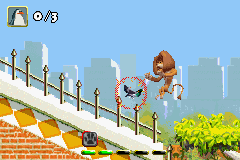
Madagascar (S)(Independent) is a classic Game Boy Advance game that mixes action and platforming into a lively, accessible adventure. Its simple gameplay and nostalgic charm make it appealing, offering a familiar yet engaging experience on a handheld console that many grew up with. Being a product of the GBA era, it’s a compact game that favors quick sessions and straightforward mechanics suitable for players of all skill levels.
Madagascar: Gameplay Overview
Madagascar is mainly a 2D platformer with action elements, where players navigate through levels filled with obstacles, enemies, and collectible items. The core gameplay involves running, jumping, and avoiding hazards as you move through stages that test your timing and precision. The controls are responsive, making it easy for newcomers to pick up but offering enough challenge for seasoned players to master. Quick reflexes and recognizing patterns are key, which is typical for handheld platformers from the early 2000s.
The game combines exploration with straightforward platforming sequences. You often need to strategize to avoid enemies or make use of power-ups and environmental features to move forward. It doesn’t have complex mechanics like weapon upgrades or branching paths, but replaying levels to improve times or find hidden items adds some depth for those who want to go further.
Modes, Levels and Progression
Madagascar offers a single-player experience with a series of levels that get more challenging as you go. The progression is linear, with each stage presenting new challenges and enemies to keep things fresh. The levels vary in layout, theme, and obstacle placement, providing enough variety to stay interested without feeling overwhelming. It doesn’t include multiple modes or branching stories, focusing instead on completing levels and aiming for high scores or collectibles.
As you advance, tougher platforming sections and more aggressive enemies appear, requiring better timing and strategic movement. The straightforward progression system makes it easy to pick up and play, but mastering the game’s timing and environmental cues can take some practice. Short play sessions fit well with the game’s design, and the variety of levels encourages replay to improve your performance or discover secrets.
Winning Strategies
Getting good at Madagascar relies on mastering timing and observation. Here are some tips:
- Watch enemy patterns carefully; rushing can lead to unnecessary damage or failure.
- Use environmental features like platforms or background objects to avoid enemies or reach higher spots.
- Practice jumps to land precisely, especially on moving platforms or narrow ledges.
- Collect items or power-ups early—they can give you an edge in tougher sections.
- Take your time navigating tricky parts—patience often prevents mistakes and can save time.
- If you’re stuck, revisiting earlier levels can help sharpen your skills and build confidence for tougher parts.
Common Questions About Madagascar
How does the difficulty change across levels?
The game begins with fairly simple platforming, then gradually introduces more enemies and complex layouts. You’ll need better timing and strategic movement as you progress. The difficulty increases steadily but remains manageable for those familiar with platformers.
Are there multiple modes or just a single-player experience?
Madagascar is designed for single players going through levels one after another. There aren’t any alternate modes or multiplayer options, but the variety in level design keeps things interesting enough for repeated attempts.
How much replay value does it offer?
With a focus on high scores, time trials, and collectibles, Madagascar encourages replaying levels to get better results. It doesn’t have branching paths or unlockables, but its simple setup makes it easy to pick up for quick sessions or to master all the levels.
Madagascar remains a compact, engaging platformer that’s fun to play again and again. Its straightforward gameplay and level design make it a solid example of the action-platformer genre on the Game Boy Advance, offering a nostalgic experience that’s easy to pick up but still rewarding to master.
Related games: you can also try Lego Racers 2 (U)(Venom) and Casper (E)(Rocket), or browse all other games in the Game Boy Advance category.
How to Play Madagascar (S)(Independent)?
Move your character through levels by running and jumping, avoiding enemies and hazards while collecting items to progress and improve your score.
Game Controls
Arrow keys control movement; action buttons are mapped to keyboard keys for jumping and interacting.
You may be interested in:
-
 Game Boy Advance
♥ 2
Zooo (J)(Rising Sun)
Game Boy Advance
♥ 2
Zooo (J)(Rising Sun) -
 Game Boy Advance
♥ 4
Zooo (E)(Trashman)
Game Boy Advance
♥ 4
Zooo (E)(Trashman) -
 Game Boy Advance
♥ 2
ZooCube (U)(Mode7)
Game Boy Advance
♥ 2
ZooCube (U)(Mode7) -
 Game Boy Advance
♥ 1
ZooCube (E)(Blizzard)
Game Boy Advance
♥ 1
ZooCube (E)(Blizzard) -
 Game Boy Advance
♥ 1
Zone of the Enders – The Fist of Mars (U)(Mode7)
Game Boy Advance
♥ 1
Zone of the Enders – The Fist of Mars (U)(Mode7) -
 Game Boy Advance
♥ 1
Zone of the Enders – The Fist of Mars (E)(Cezar)
Game Boy Advance
♥ 1
Zone of the Enders – The Fist of Mars (E)(Cezar) -
 Game Boy Advance
♥ 1
Zoku Bokura no Taiyou – Taiyou Shounen Django (J)(Independent)
Game Boy Advance
♥ 1
Zoku Bokura no Taiyou – Taiyou Shounen Django (J)(Independent) -
 Game Boy Advance
♥ 7
Zoku Bokura no Taiyou – Taiyou Shounen Django (J)(Caravan)
Game Boy Advance
♥ 7
Zoku Bokura no Taiyou – Taiyou Shounen Django (J)(Caravan)
Comments (0)
No comments yet. Be the first to comment!