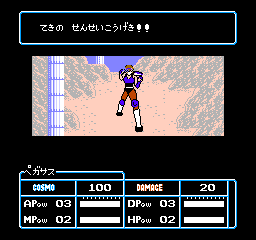
Saint Seiya – Ougon Densetsu (Japan)
0 14 15
Saint Seiya – Ougon Densetsu (Japan) is a classic NES game that combines action, adventure, and role-playing elements into one package. Originally released for the Nintendo Entertainment System, it offers a nostalgic look back at the 8-bit era with simple gameplay and pixel art style. As a relic from the NES days, it appeals to fans of vintage titles and those interested in the Saint Seiya universe, a franchise known for its mythological themes and heroic battles. Playing it here on this browser site gives quick access to a game that’s both challenging and a trip back in time.
Why Saint Seiya – Ougon Densetsu Is Worth Playing
This NES title provides a straightforward but engaging action experience, with some role-playing mechanics that encourage exploration and character growth. Its visuals are typical of the NES—pixel sprites and basic backgrounds—but they still do a good job of capturing the mythological setting. The soundtrack, while simple, helps build a sense of adventure and urgency. The difficulty is part of the experience—learning enemy attack patterns and managing resources carefully is essential. Fans of the genre will find its mix of combat and exploration rewarding, making it worth playing for those who enjoy a challenge.
The role-playing elements aren’t overly complicated but add enough depth to set it apart from pure action games. Making strategic choices during combat and navigation keeps things interesting and helps with progression. The game moves at a quick pace, encouraging fast thinking and sharp reflexes. For those who appreciate retro titles that reward patience and skill, Saint Seiya – Ougon Densetsu offers a solid challenge set in a mythologically inspired world.
Tips to Get Ahead
If you’re trying to do well in this game, keep these tips in mind:
- Watch enemy attack patterns to avoid unnecessary damage. Patience can save you a lot of trouble.
- Save your health and resources for tougher fights—spending them wisely early on can make a difference.
- Explore every corner; hidden items or secrets might be just off the beaten path.
- Pay attention to pacing—sometimes it’s better to pause and plan your next move rather than rushing in.
- Practice combat to improve your timing and reactions, especially during boss battles.
- If you get stuck, go back to earlier areas; retracing your steps can reveal helpful items or shortcuts.
Things to Know Before You Start
Question?
Is Saint Seiya – Ougon Densetsu suitable for casual players?
It’s more for those who enjoy patience and a challenge. The difficulty can be tough for newcomers, and a single session might last between 30 minutes and an hour depending on how far you get.
Question?
How long does a typical game session take?
It varies, but expect to spend at least 20-30 minutes on a single try, especially if exploring thoroughly or facing tough enemies. It’s not a quick game you can finish in minutes, but it’s manageable in smaller sessions.
Question?
Is Saint Seiya – Ougon Densetsu only in Japanese?
Yes, this version is in Japanese. That can make things trickier if you don’t understand the language or menus. You might need to experiment a bit to figure out what’s happening.
Question?
Does the game have multiple endings or modes?
No, it’s a straightforward adventure with a single path. The challenge mainly comes from mastering the gameplay rather than exploring different routes.
Give Saint Seiya – Ougon Densetsu a try and see if you can handle its challenges. Its mix of action, adventure, and role-playing on the NES makes it a nice addition to any retro collection, and you can play it right in your browser whenever you want.
Related games: you can also try Jovial Race (Unl) and Esper Dream 2 – Aratanaru Tatakai (Japan), or browse all other games in the NES category.
How to Play Saint Seiya – Ougon Densetsu (Japan)?
Move through levels, fight enemies, and explore to find items and secrets. Defeat bosses and progress by managing health and resources while advancing the story.
Game Controls
Arrow keys move your character; action buttons are mapped to keyboard keys for attacking and interacting.
You may be interested in:
-
![Zombie Hunter (Japan) [En by KingMike v1.01]](https://www.playf2p.com/wp-content/uploads/zombie-hunter-japan-en-by-kingmike-v1-01-200x120.png) NES
♥ 2
Zombie Hunter (Japan) [En by KingMike v1.01]
NES
♥ 2
Zombie Hunter (Japan) [En by KingMike v1.01] -
 NES
♥ 1
Zombie Hunter (Japan)
NES
♥ 1
Zombie Hunter (Japan) -
 NES
♥ 1
Zoids Mokushiroku (Japan)
NES
♥ 1
Zoids Mokushiroku (Japan) -
 NES
♥ 2
Zoids 2 – Zenebas no Gyakushuu (Japan)
NES
♥ 2
Zoids 2 – Zenebas no Gyakushuu (Japan) -
 NES
♥ 1
Zoids – Chuuou Tairiku no Tatakai (Japan)
NES
♥ 1
Zoids – Chuuou Tairiku no Tatakai (Japan) -
 NES
♥ 11
Zippy Race (Japan)
NES
♥ 11
Zippy Race (Japan) -
 NES
♥ 1
Zhen Ben Xi You Ji (Asia) (Unl)
NES
♥ 1
Zhen Ben Xi You Ji (Asia) (Unl) -
 NES
♥ 1
Zenbei!! Pro Basket (Japan)
NES
♥ 1
Zenbei!! Pro Basket (Japan)
Comments (0)
No comments yet. Be the first to comment!