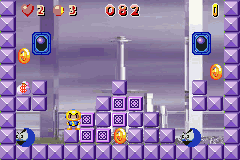
Tang Tang (U)(Mode7)
0 1 0
Tang Tang (U)(Mode7) is a classic Game Boy Advance game that combines action, puzzle, and platforming in a compact package. Its mix of genres keeps the gameplay interesting, challenging players to move through levels while solving puzzles and avoiding obstacles. As a title from the GBA era, it offers a nostalgic look into handheld gaming with simple controls and mechanics designed for portability, all playable directly in your browser without needing extra downloads.
Tang Tang: Gameplay Overview
The game revolves around guiding a character through levels filled with puzzles, enemies, and platforming challenges. The main mechanics involve precise jumps, timing-based puzzles, and clever use of items or environmental features to move forward. Quick reflexes are needed to dodge dangers or defeat enemies, while puzzles require thinking and pattern recognition. This mix creates a gameplay rhythm that shifts between fast-paced platforming and slower, thoughtful puzzle solving.
Level design encourages exploration and mastery, with each stage offering different paths or hidden areas to find. The controls are simple but responsive, letting players focus on mastering timing and mechanics. Progress usually means completing levels within certain limits, often with a focus on efficiency and resource management or solving environmental puzzles. The game rewards players who learn each stage’s layout and enemy patterns, encouraging experimentation with different approaches.
Modes, Levels and Progression
As a single-player game, Tang Tang follows a straightforward path through its levels, each becoming more challenging. There aren’t multiple modes, but the game emphasizes mastering its core mechanics across its stages. Each level has a different theme, obstacle placement, and puzzle type, making every stage feel distinct. The difficulty ramps up gradually, requiring better timing and puzzle skills as you go along.
Replaying levels for better times or discovering hidden areas adds to the game’s replay value. Many players revisit earlier stages to try new strategies or aim for higher scores, which fosters a sense of progress and achievement. Its design favors short, focused play sessions, making it easy to jump in for quick tries or longer attempts to improve skills.
Winning Strategies
Pay attention to timing and environmental cues to improve your progress. Watching enemy movements and practicing jump timing helps avoid setbacks. Focus on mastering early levels to build confidence before tackling more complex puzzles.
- Explore each level thoroughly for shortcuts or hidden spots that save time.
- Practice your jumps to land precisely on platforms or clear hazards.
- Use environmental objects wisely—pushing or activating them can help you open new paths or solve puzzles.
- Observe enemy patterns and plan your approach accordingly.
- Manage your limited resources, like items or time-based challenges, so you don’t run out before finishing.
Common Questions About Tang Tang
How does the difficulty change across levels?
The challenge grows gradually. Early levels act as tutorials, while later ones introduce tougher puzzles, faster enemies, and tighter timing, pushing players to sharpen their skills.
Are there different modes or level varieties?
The game mainly follows a linear sequence of levels, each with its own theme and layout. While there aren’t separate modes, the variety in level design keeps things fresh without branching paths.
How much replay value is there?
Players often go back to improve their scores, finish optional tasks, or find hidden spots. Its short sessions make it easy to try again and aim for better mastery of the challenges.
Overall, Tang Tang offers a compact, rewarding experience where timing, puzzle-solving, and platforming come together. Its straightforward mechanics and increasing difficulty make it a fun retro game to explore in a browser setting.
Related games: you can also try Super Mario Advance – SNES Color Restoration and Super Street Fighter II Turbo Revival (U)(Nobody), or browse all other games in the Game Boy Advance category.
How to Play Tang Tang (U)(Mode7)?
Guide Tang Tang through levels by jumping, solving puzzles, and avoiding enemies. Use timing and environmental clues to progress and discover hidden areas.
Game Controls
Arrow keys control movement; action buttons are mapped to keyboard keys for jumping and interacting.
You may be interested in:
-
 Game Boy Advance
♥ 2
Zooo (J)(Rising Sun)
Game Boy Advance
♥ 2
Zooo (J)(Rising Sun) -
 Game Boy Advance
♥ 4
Zooo (E)(Trashman)
Game Boy Advance
♥ 4
Zooo (E)(Trashman) -
 Game Boy Advance
♥ 2
ZooCube (U)(Mode7)
Game Boy Advance
♥ 2
ZooCube (U)(Mode7) -
 Game Boy Advance
♥ 1
ZooCube (E)(Blizzard)
Game Boy Advance
♥ 1
ZooCube (E)(Blizzard) -
 Game Boy Advance
♥ 1
Zone of the Enders – The Fist of Mars (U)(Mode7)
Game Boy Advance
♥ 1
Zone of the Enders – The Fist of Mars (U)(Mode7) -
 Game Boy Advance
♥ 1
Zone of the Enders – The Fist of Mars (E)(Cezar)
Game Boy Advance
♥ 1
Zone of the Enders – The Fist of Mars (E)(Cezar) -
 Game Boy Advance
♥ 1
Zoku Bokura no Taiyou – Taiyou Shounen Django (J)(Independent)
Game Boy Advance
♥ 1
Zoku Bokura no Taiyou – Taiyou Shounen Django (J)(Independent) -
 Game Boy Advance
♥ 5
Zoku Bokura no Taiyou – Taiyou Shounen Django (J)(Caravan)
Game Boy Advance
♥ 5
Zoku Bokura no Taiyou – Taiyou Shounen Django (J)(Caravan)
Comments (0)
No comments yet. Be the first to comment!