WALL-E (Korea)
0 1 0
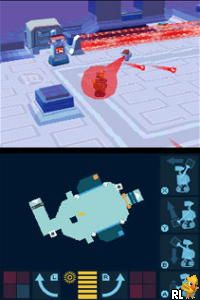
WALL-E (Korea) is a classic Nintendo DS game that brings the charming robot and environmental themes of the animated film into a handheld gaming experience. As a platformer with puzzle elements, it offers players a chance to guide WALL-E through various levels filled with obstacles and interactive objects. The game’s design emphasizes exploration and problem-solving, making it a fitting choice for fans of the movie and players who enjoy light platforming challenges on the go.
WALL-E: Gameplay Overview
The gameplay centers around controlling WALL-E as he moves through different environments, each designed with platforming and puzzle-solving in mind. The core mechanics involve moving WALL-E across levels, activating switches, collecting items, and interacting with environmental objects to progress. Timing and spatial awareness are key, requiring players to think ahead and plan their actions carefully. The controls are simple and align with the Nintendo DS’s dual-screen setup, often using the touchscreen for specific interactions or puzzle elements.
Levels are structured as linear segments but often contain multiple routes or hidden areas, encouraging exploration. Players need to use WALL-E’s abilities to manipulate objects, activate mechanisms, and avoid hazards. The game also includes physics puzzles, where players figure out the correct sequence of actions to unlock new paths or access hidden collectibles. The main loop involves exploring each level, solving puzzles, and collecting items, which adds replay value and encourages thorough exploration.
Modes, Levels and Progression
WALL-E features a series of levels that gradually become more complex, introducing new puzzles and obstacles as you progress. The game doesn’t include multiple modes but focuses on a single-player experience with a linear path through its stages. Each level offers a self-contained challenge, but the overall game encourages revisiting earlier stages for collectibles or to improve completion times.
The variety of levels provides different puzzle types and environmental themes, from cityscapes to more nature-inspired scenes. While there aren’t a huge number of levels, the stages are well-crafted and offer enough content for several hours of gameplay. Progression mainly depends on completing levels to unlock new stages, with some levels featuring optional collectibles that reward thorough exploration and replayability.
Winning Strategies
Understanding each level’s layout and mechanics will help you solve puzzles more efficiently. Activate switches early to unlock pathways or reveal hidden areas.
- Pay attention to environmental clues that indicate interactive objects or secret routes.
- Use the touchscreen carefully to manipulate objects; timing your interactions can help avoid hazards.
- Explore every corner of each level to find collectibles that unlock bonus content or extra challenges.
- Try different approaches to puzzles, as multiple solutions might exist for some challenges.
- Keep track of the order in which you activate switches to avoid wasting time and to keep your progress smooth.
Common Questions About WALL-E
How does the difficulty change as you play?
The game introduces more complex puzzles and environmental hazards gradually, so it requires more strategic thinking later on. Early levels act as tutorials, while later stages demand better timing and planning.
Are there different modes or ways to replay levels?
The game is mainly linear, but finding hidden items and exploring alternate routes adds to replay value. No separate modes are available, but replaying levels to gather all collectibles is encouraged.
How long does it usually take to finish the game?
Most players will spend a few hours completing it, depending on how much they explore each level. Going back to find all collectibles can extend that time, especially if aiming for 100% completion.
WALL-E offers a straightforward experience blending platforming and puzzles, playable directly in your browser. Its simple mechanics and charming style make it accessible and engaging, a nice nostalgic challenge for fans of the character and genre alike.
Related games: you can also try Playmobil Interactive – Pirates (USA) (En,Fr,De,Es,Nl) and Foster's Home for Imaginary Friends – Imagination Invaders (Europe), or browse all other games in the Nintendo DS category.
How to Play WALL-E (Korea)?
Guide WALL-E through levels by moving, activating switches, and solving puzzles to reach the end. Collect items and explore hidden areas to unlock new stages and improve your score.
Game Controls
Arrow keys control movement; action keys for interacting and activating objects.
You may be interested in:
-
 Nintendo DS
♥ 1
Casper’s Scare School – Classroom Capers (USA)
Nintendo DS
♥ 1
Casper’s Scare School – Classroom Capers (USA) -
 Nintendo DS
♥ 1
Zunou Nouryoku Koujou Machine – Touch de Zunoo DS (Japan)
Nintendo DS
♥ 1
Zunou Nouryoku Koujou Machine – Touch de Zunoo DS (Japan) -
 Nintendo DS
♥ 1
Zunou ni Asekaku Game Series! Vol. 1 – Cool 104 Joker & Setline (Japan)
Nintendo DS
♥ 1
Zunou ni Asekaku Game Series! Vol. 1 – Cool 104 Joker & Setline (Japan) -
 Nintendo DS
♥ 9
Zuma’s Revenge (USA)
Nintendo DS
♥ 9
Zuma’s Revenge (USA) -
 Nintendo DS
♥ 1
Zubo (USA) (En,Fr,Es)
Nintendo DS
♥ 1
Zubo (USA) (En,Fr,Es) -
 Nintendo DS
♥ 1
Zubo (Europe) (En,Fr,De,Es,It,Nl,Sv)
Nintendo DS
♥ 1
Zubo (Europe) (En,Fr,De,Es,It,Nl,Sv) -
 Nintendo DS
♥ 1
Zorro – Quest for Justice (USA) (En,Fr,De,Es,It)
Nintendo DS
♥ 1
Zorro – Quest for Justice (USA) (En,Fr,De,Es,It) -
 Nintendo DS
♥ 1
Zorro – Quest for Justice (Europe) (En,Fr,De,Es,It)
Nintendo DS
♥ 1
Zorro – Quest for Justice (Europe) (En,Fr,De,Es,It)
Comments (0)
No comments yet. Be the first to comment!