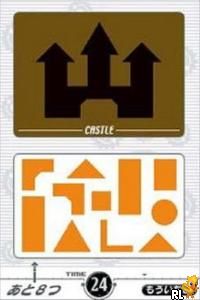
Yawaraka Atama Juku (Japan)
0 1 0
Yawaraka Atama Juku (Japan) is a classic Nintendo DS game that offers a puzzle and brain-training experience inspired by Japanese design. It captures the charm of early 2000s handheld gaming, featuring simple but engaging mental exercises that test flexibility, pattern recognition, and quick thinking. Its minimalistic look and straightforward mechanics make it easy for casual players to pick up, yet it provides enough challenge to keep puzzle enthusiasts interested. The game’s gentle difficulty and short sessions make it suitable for quick mental refreshers or light gaming in a browser.
Why Yawaraka Atama Juku Is Worth Playing
This Nintendo DS favorite stands out thanks to its clean visuals and calming pastel-colored interface that feels welcoming rather than overwhelming. Unlike more hectic puzzle games, Yawaraka Atama Juku promotes a relaxed vibe, encouraging players to go at their own pace. The puzzles focus on pattern matching, shape recognition, and quick responses, presented in a way that’s easy to understand but hard to master. Its pace respects how your mind works, offering quick challenges you can complete in just a few minutes.
The game also reflects subtle Japanese cultural touches that add charm without overpowering the gameplay. It rewards patience and careful analysis, often encouraging players to think each puzzle through rather than rushing. The simple sound design and clean visuals help minimize distractions, making it a good choice for a quick mental break. Despite its simplicity, each completed puzzle can bring a small sense of achievement, making it easy to keep coming back. Playing it through a browser makes trying it out quick and accessible.
Tips to Get Ahead
Getting comfortable with how the game plays can really help improve your scores and efficiency. Here are some practical tips:
- Take your time to analyze each puzzle before acting; rushing can lead to errors.
- Notice recurring patterns or shapes that show up across puzzles to recognize them faster.
- Practice in short, regular sessions to build mental agility without feeling drained.
- Pay attention to color and shape cues—they often suggest the right response or next move.
- Keep calm and stay patient—this game is designed for gentle challenges, not high-pressure situations.
- If you get stuck, reset and look at the puzzle with fresh eyes, focusing on the overall pattern.
Things to Know Before You Start
Before jumping in, here are some common questions:
Is Yawaraka Atama Juku difficult for beginners?
Answer: The game is easy to get into for players of all skill levels. It introduces puzzles gradually, so casual players will find it approachable, and seasoned puzzle fans can still enjoy the challenge.
How long does a typical session take?
Answer: Sessions tend to be brief, just a few minutes per puzzle, making it ideal for quick mental exercises or a light break.
Is Yawaraka Atama Juku good for puzzle enthusiasts?
Answer: Yes, its simple mechanics and gradually increasing difficulty appeal to both casual players and those looking for a steady mental workout. It’s straightforward but enough to keep you engaged over multiple plays.
Overall, Yawaraka Atama Juku offers a straightforward, low-pressure puzzle experience that works well for a quick mental boost. Its calming visuals and simple gameplay make it perfect for anyone interested in light brain training, especially if you enjoy Japanese-style puzzles. Give it a shot in your browser—this classic Nintendo DS game is ready to give your mind a gentle challenge.
Related games: you can also try Victorious – Hollywood Arts Debut (Europe) (En,Fr,De,Es,It) and Itsudemo Dokodemo – Onita Atsushi no Seiji Quiz DS (Japan), or browse all other games in the Nintendo DS category.
How to Play Yawaraka Atama Juku (Japan)?
Match shapes and colors by analyzing patterns quickly and carefully to complete puzzles. Take your time, recognize recurring cues, and relax as you solve each challenge at your own pace.
Game Controls
Arrow keys control navigation; Enter confirms selections; use keyboard to interact with puzzles.
You may be interested in:
-
 Nintendo DS
♥ 1
Casper’s Scare School – Classroom Capers (USA)
Nintendo DS
♥ 1
Casper’s Scare School – Classroom Capers (USA) -
 Nintendo DS
♥ 1
Zunou Nouryoku Koujou Machine – Touch de Zunoo DS (Japan)
Nintendo DS
♥ 1
Zunou Nouryoku Koujou Machine – Touch de Zunoo DS (Japan) -
 Nintendo DS
♥ 1
Zunou ni Asekaku Game Series! Vol. 1 – Cool 104 Joker & Setline (Japan)
Nintendo DS
♥ 1
Zunou ni Asekaku Game Series! Vol. 1 – Cool 104 Joker & Setline (Japan) -
 Nintendo DS
♥ 9
Zuma’s Revenge (USA)
Nintendo DS
♥ 9
Zuma’s Revenge (USA) -
 Nintendo DS
♥ 1
Zubo (USA) (En,Fr,Es)
Nintendo DS
♥ 1
Zubo (USA) (En,Fr,Es) -
 Nintendo DS
♥ 1
Zubo (Europe) (En,Fr,De,Es,It,Nl,Sv)
Nintendo DS
♥ 1
Zubo (Europe) (En,Fr,De,Es,It,Nl,Sv) -
 Nintendo DS
♥ 1
Zorro – Quest for Justice (USA) (En,Fr,De,Es,It)
Nintendo DS
♥ 1
Zorro – Quest for Justice (USA) (En,Fr,De,Es,It) -
 Nintendo DS
♥ 1
Zorro – Quest for Justice (Europe) (En,Fr,De,Es,It)
Nintendo DS
♥ 1
Zorro – Quest for Justice (Europe) (En,Fr,De,Es,It)
Comments (0)
No comments yet. Be the first to comment!