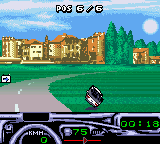
Taxi 2 (France)
0 1 0
Taxi 2 (France) is a classic Game Boy Color game that captures the essence of racing and driving from the late ’90s and early 2000s. Its straightforward gameplay and nostalgic pixel art make it a solid choice for fans of vintage handheld gaming. This game lets players experience a driving challenge on the original Game Boy Color hardware, now emulated directly in your browser for instant access and play without any downloads or setup.
Taxi 2: Gameplay Overview
The main idea behind Taxi 2 is controlling a taxi to navigate through city streets, completing timed missions or reaching specific destinations. Players steer their vehicle with simple directional controls, avoiding obstacles and other cars while trying to stay quick and efficient. The game calls for quick reflexes and good route planning, rewarding those who can balance speed with safety.
Each session features levels that get harder as you go, requiring sharper navigation and better timing. The gameplay revolves around finishing objectives within a time limit, encouraging players to replay levels to improve their scores or perfect their routes. The controls are easy to pick up, suited to the Game Boy Color’s limited input, making it accessible for all ages but still engaging for experienced gamers.
Modes, Levels and Progression
Taxi 2 mainly offers a single mode focused on completing various taxi routes across a handful of levels. Each level introduces new layouts, obstacles, and sometimes more traffic, gradually increasing the challenge. It doesn’t have complex storylines or character upgrades; instead, the focus is on mastering the driving routes. As players finish more levels, they unlock higher scores and better times, providing a simple yet satisfying sense of progress for those aiming to perfect their taxi routes.
Winning Strategies
Memorizing each route at the start can really boost your performance. Staying alert to traffic patterns and obstacles helps avoid crashes and delays. Gentle steering is better than reckless speed if you want to keep control in tight spots. Use edges and barriers to your advantage, especially when navigating through crowded areas.
- Practice each level to memorize the routes and improve your timing.
- Keep a steady hand; sharp turns might cause accidents or penalties.
- Pay attention to traffic flow; understanding vehicle patterns helps prevent collisions.
- Focus on precision rather than just speed, taking advantage of the game’s simplicity.
- Try levels multiple times to improve your best times and scores.
Common Questions About Taxi 2
Does the difficulty increase as I progress?
Yes, the levels get more complex with tighter turns and busier streets, requiring sharper reflexes and better route planning as you go.
Are there multiple modes, or just a single route-focused gameplay?
Taxi 2 features one main gameplay mode centered on completing taxi routes. It lacks additional modes or storylines, but the increasing difficulty and level design offer enough variety and challenge.
How long does a typical session last, and is there replay value?
A single level can be finished in a few minutes, but replaying to beat your best times and scores keeps things interesting. The straightforward design makes it perfect for quick sessions or trying to improve your performance repeatedly.
Taxi 2 is a focused driving game that tests timing, route memory, and control. Its simple, no-frills approach makes it a memorable part of Game Boy Color history, now playable in your browser for quick nostalgic fun or to challenge your driving skills.
Related games: you can also try Tabaluga (Germany) and Pocket Color Mahjong (Japan), or browse all other games in the Game Boy Color category.
How to Play Taxi 2 (France)?
Drive the taxi through city streets, complete routes within time limits, avoid obstacles, and improve your scores by memorizing routes and timing your moves carefully.
Game Controls
Arrow keys control the taxi; other keys handle acceleration, braking, and interactions.
You may be interested in:
-
 Game Boy Color
♥ 43
Zook Hero Z
Game Boy Color
♥ 43
Zook Hero Z -
 Game Boy Color
♥ 1
Zok Zok Heroes (Japan)
Game Boy Color
♥ 1
Zok Zok Heroes (Japan) -
 Game Boy Color
♥ 1
Zoids – Shirogane no Juukishin Liger Zero (Japan)
Game Boy Color
♥ 1
Zoids – Shirogane no Juukishin Liger Zero (Japan) -
 Game Boy Color
♥ 1
Zoids – Jashin Fukkatsu! Genobreaker Hen (Japan)
Game Boy Color
♥ 1
Zoids – Jashin Fukkatsu! Genobreaker Hen (Japan) -
 Game Boy Color
♥ 2
Zoboomafoo – Playtime in Zobooland (USA)
Game Boy Color
♥ 2
Zoboomafoo – Playtime in Zobooland (USA) -
 Game Boy Color
♥ 1
Zidane Football Generation (Europe) (En,Fr,De,Es,It)
Game Boy Color
♥ 1
Zidane Football Generation (Europe) (En,Fr,De,Es,It) -
 Game Boy Color
♥ 1
Zen-Nihon Shounen Soccer Taikai – Mezase Nihon Ichi! (Japan)
Game Boy Color
♥ 1
Zen-Nihon Shounen Soccer Taikai – Mezase Nihon Ichi! (Japan) -
 Game Boy Color
♥ 1
Zebco Fishing! (USA)
Game Boy Color
♥ 1
Zebco Fishing! (USA)
Comments (0)
No comments yet. Be the first to comment!