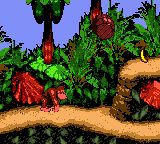
Donkey Kong 2001 (Japan)
0 3 0
Donkey Kong 2001 (Japan) is a classic Game Boy Color platformer that captures the feel of early 2000s handheld gaming. It features straightforward gameplay focused on jumping, dodging, and navigating through challenging levels. Its simple mechanics make it a nostalgic pick for fans of the genre, especially those interested in experiencing what handheld gaming was like during that time.
Donkey Kong 2001: Gameplay Overview
The game revolves around controlling a character who must move through levels filled with obstacles and enemies. The main challenge is timing jumps carefully and reacting quickly to avoid hazards, climb platforms, and reach the end of each stage. Quick reflexes are needed, and players often need to think ahead to prevent falling or getting caught. Recognizing patterns and reacting in time are key skills, which are common in platformers from this period, providing a challenge that rewards skill and patience.
Levels are mostly linear but become tougher as you go, with more complex platform setups and faster enemies. The controls respond well, making reactions smooth and intuitive. Players often replay levels to beat their best times or earn higher scores, adding a competitive element even in a simple platformer.
While the game keeps things minimal, its focus on precise jumping and avoiding obstacles makes it satisfying for fans of classic titles. Each level feels like a self-contained challenge that tests timing and spatial awareness. It runs smoothly on the emulator, faithfully recreating the original handheld experience without extra features or modes beyond the core gameplay.
Modes, Levels and Progression
Donkey Kong 2001 takes players through a series of levels, each with unique layouts and enemy placements. There are no alternative modes like time trials or multiplayer, but the variety within the levels keeps things interesting. As you progress, levels become more complex, with tricky platform arrangements and quicker enemies, demanding sharper reflexes.
Mastering each level’s layout and timing is the main focus. Some stages require precise jumps or waiting for enemies to pass. Progression is straightforward — finishing one set of levels unlocks the next, with the difficulty gradually increasing to test your platforming skills. While there aren’t branching paths or hidden surprises, the rising challenge and level design give enough motivation to replay and improve.
Players often go back to levels to beat their best scores or complete them faster. The short, focused levels make for quick gaming sessions, with the increasing difficulty offering a reason to try again and perfect runs.
Winning Strategies
Pay attention to timing and observe enemy movements carefully. Knowing how enemies behave allows you to plan safe routes and avoid dangers efficiently. Sometimes waiting for the right moment to jump or move can save time and prevent mistakes.
- Watch enemy patterns to anticipate their actions and plan your moves.
- Use the edges of platforms to give yourself more reaction time.
- Practice jumps for better accuracy, especially on tricky platform setups.
- Don’t rush—sometimes waiting is better than rushing into danger.
- Once you’re familiar with a level, try completing it quickly to reduce mistakes under pressure.
- Replaying difficult levels helps memorize layouts and enemy positions for smoother navigation.
Common Questions About Donkey Kong 2001
How does the difficulty change as I go?
Levels get tougher with more complex designs and faster enemies, pushing you to improve timing and strategy. Early stages introduce mechanics, while later ones demand precision and quick reactions in tight spaces.
Are there different modes or difficulty levels?
The game mainly follows a single path without separate difficulty settings. The challenge is in mastering each level, which gets more demanding over time. Replaying for higher scores or better times keeps the game interesting.
How long does it usually take to finish?
Most players can complete all levels in about 15 to 30 minutes once they know the layout. Trying to beat personal bests or finish faster can extend that time.
Overall, this game is about getting comfortable with its core mechanics. Its simple setup and rising difficulty make it a good pick for fans of classic handheld platformers. It offers a nostalgic look at early portable gaming and can be played directly in your browser without any fuss.
Related games: you can also try Dogz – Your Virtual Petz Palz (USA) and Barbie – Meeres Abenteuer (Germany), or browse all other games in the Game Boy Color category.
How to Play Donkey Kong 2001 (Japan)?
Move your character through levels by jumping and avoiding obstacles and enemies. Reach the end of each stage while reacting quickly and timing your jumps carefully.
Game Controls
Arrow keys act as the D-pad; Enter is Start; other keys handle jump and action buttons.
You may be interested in:
-
 Game Boy Color
♥ 43
Zook Hero Z
Game Boy Color
♥ 43
Zook Hero Z -
 Game Boy Color
♥ 1
Zok Zok Heroes (Japan)
Game Boy Color
♥ 1
Zok Zok Heroes (Japan) -
 Game Boy Color
♥ 1
Zoids – Shirogane no Juukishin Liger Zero (Japan)
Game Boy Color
♥ 1
Zoids – Shirogane no Juukishin Liger Zero (Japan) -
 Game Boy Color
♥ 1
Zoids – Jashin Fukkatsu! Genobreaker Hen (Japan)
Game Boy Color
♥ 1
Zoids – Jashin Fukkatsu! Genobreaker Hen (Japan) -
 Game Boy Color
♥ 2
Zoboomafoo – Playtime in Zobooland (USA)
Game Boy Color
♥ 2
Zoboomafoo – Playtime in Zobooland (USA) -
 Game Boy Color
♥ 1
Zidane Football Generation (Europe) (En,Fr,De,Es,It)
Game Boy Color
♥ 1
Zidane Football Generation (Europe) (En,Fr,De,Es,It) -
 Game Boy Color
♥ 1
Zen-Nihon Shounen Soccer Taikai – Mezase Nihon Ichi! (Japan)
Game Boy Color
♥ 1
Zen-Nihon Shounen Soccer Taikai – Mezase Nihon Ichi! (Japan) -
 Game Boy Color
♥ 1
Zebco Fishing! (USA)
Game Boy Color
♥ 1
Zebco Fishing! (USA)
Comments (0)
No comments yet. Be the first to comment!